Conservative political organizer Charlie Kirk was killed last week. The internet is afire with fury and blame, and there’s a real risk that tensions could spiral out of control into more bloodshed. Regardless of one’s politics, it’s undeniable that the functioning of democracy depends on free speech and the rule of law.
I won’t mince words about Kirk himself. He spent years spreading racist, sexist, antisemitic, homophobic, Islamophobic, climate-denying lies that caused great pain to others. Ezra Klein wrote that Kirk practiced politics “the right way,” that is, with words, not bullets. True, but that’s a disappointingly low bar. If the “right way” instead implies fact-based and respectful conduct, Kirk didn’t meet the standard.
Still, Charlie Kirk deserved to be safe. He deserved to live. Everyone does. Freedom from violence is the most basic of human rights. Like the murders of Minnesota State Rep. Melissa Hortman and her husband earlier this year, or the nearly twenty thousand Americans shot dead by guns in 2023, Kirk’s death is a collective failure.
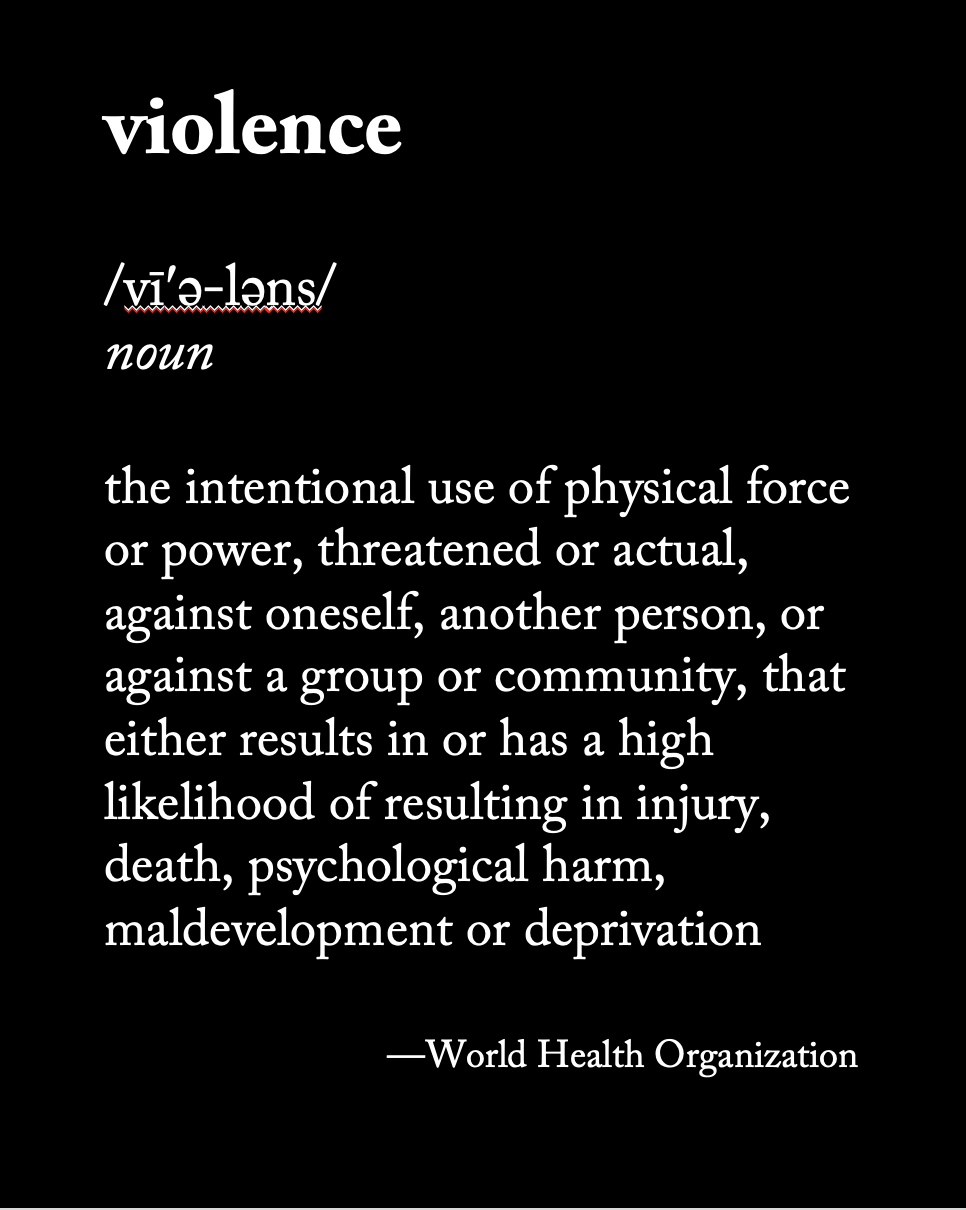
Like many Americans, I’ve been overwhelmed this past week by thoughts and emotions. But one question hammers especially loudly in my head: why do we regard some events as existential threats and others as background noise? Consider what else happened in the weeks before Kirk died. The federal government’s rollback of vaccine protections will kill thousands of Americans, with the elderly and children especially vulnerable. Congressional cuts to foreign aid will lead to an estimated 14 million excess deaths worldwide, including over four million children, over the next few years. These deaths are just as political as Kirk’s, just as much the result of deliberate choices by those in power. But we don’t call them “political violence” because we believe that they don’t threaten institutional stability.
This is not a morally defensible position. Yes, for those of us with something to lose, political and economic stability feels precious. We fear the collapse of institutions that have served us relatively well. (Relative to what? And for how long?) But for millions at home and abroad, the “rule of law” has rarely offered real protection. The children who will die from cutbacks in the aid budget deserve to live just as much as Kirk did. The difference is that their deaths don’t make us fear civil war; their deaths are already priced into the civil peace we’re desperate to preserve.
Even for those of us with a stake in the system, the rule of law is fragile. “The strong do what they can and the weak suffer what they must,” Thucydides wrote 2,500 years ago. It’s still true. The powerful follow rules when it suits them and break rules when it doesn’t. If we didn’t already believe this, the last eight months of the Trump administration should have convinced us. And if it terrifies us that the rule of law is built on the whims of the powerful and not on shared social value, we’re only catching up to what billions already feel.
(Where are we—you and me—on the continuum between powerful and powerless? Are we perpetrators or victims?)
So yes: let’s defend democracy, strengthen institutions, and condemn assassinations. But let’s also be honest. If we only abhor violence when it kills public figures, we’re not fighting for justice or equality or freedom. We are only fighting for stability.
Political violence sometimes comes quickly through bullets, and sometimes it comes slowly through policies. Acknowledging that leads us to ask not just “how do we restore the civility of debate?” but also “what are we morally compelled to do if we value every life?” A just peace is built on love of neighbor—every neighbor, regardless of race, gender, nationality, or any other marker of identity. This is what Kirk’s politics lacked, and what our response to his death still lacks. Without love of neighbor, civility is nothing more than camouflage for self-interest, and the rule of law is nothing more than a weapon of the powerful.