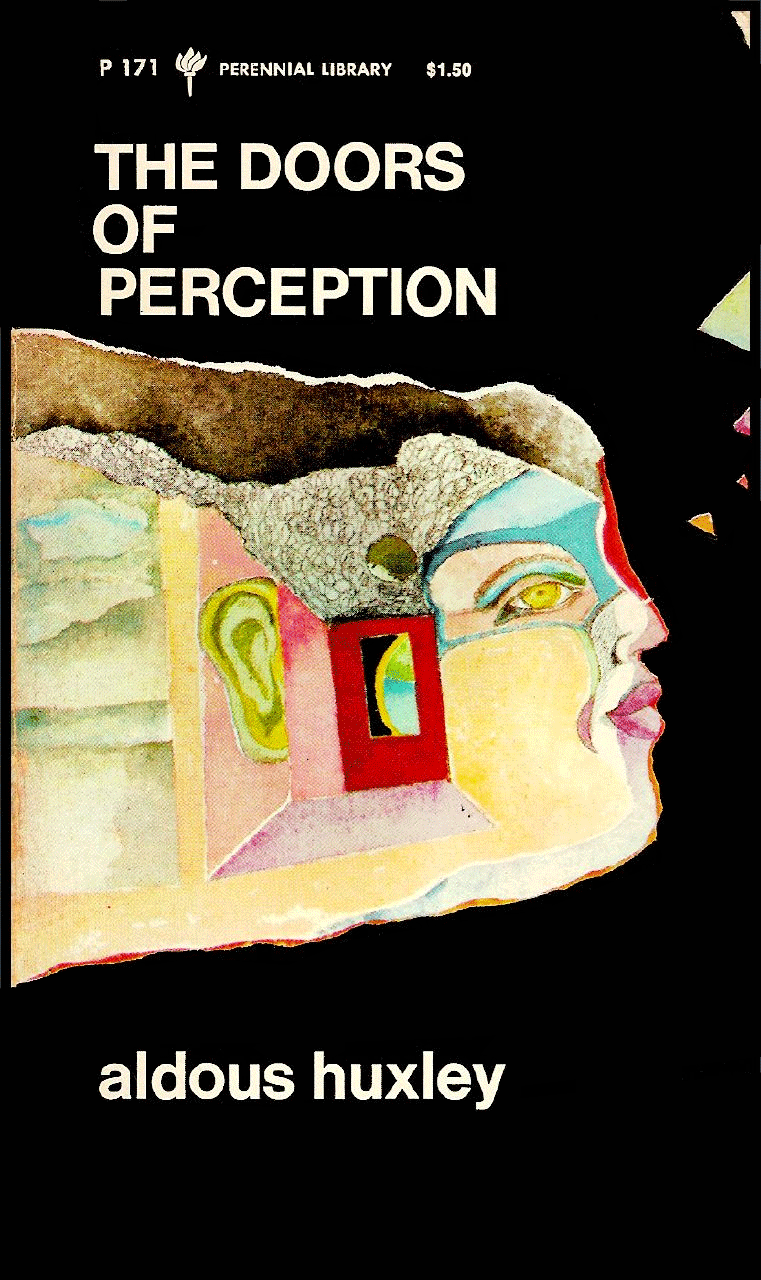
Writing coherently about a psychedelic experience is not easy. Believe me, I’ve tried. The result is usually a mix of bad poetry and worse speechifying. (Evaluated under conditions of conventional perception, of course; if the doors of perception were cleansed, even claptrap appears as it truly is, infinitely adorable.) Huxley far surpasses coherence in Doors of Perception. Words are never enough to honor the numinous, but the man gets close. But what enormous abysses lie between idea, experience, and consequence! The idea itself is simple: time and space, and thus self and other, and thus all of ontology and aesthetics and ethics, are generated by the three-pound organ perched on our necks; the world is functionally narrowed by the organism. The experience, meanwhile—the feeling of the blinding holiness of each and every damn thing—is to the idea what mountains are to mayflies. The final mystery lies in the location of the consequence. A world of love and peace should result from the cleansing of the doors of perception. It should result even from a tiny glimpse, really, which all of us have had, although I do understand that things which contain us are, by definition, too big for our field of vision. Well. Psychedelics are not, I think, a sustainable road to the enlightenment of the species, although meditation might be. That’s my bias. Still, perhaps guided tours of one’s own mind are occasionally helpful. All I’m sure of is that, under such circumstances of birth, the pursuit of anything—wealth, power, fame—except breath is very, very dumb. And even breath is a bonus. 8
Huxley, Aldous. The Doors of Perception. Chatto & Windus, 1954. Reviewed August 13, 2025.