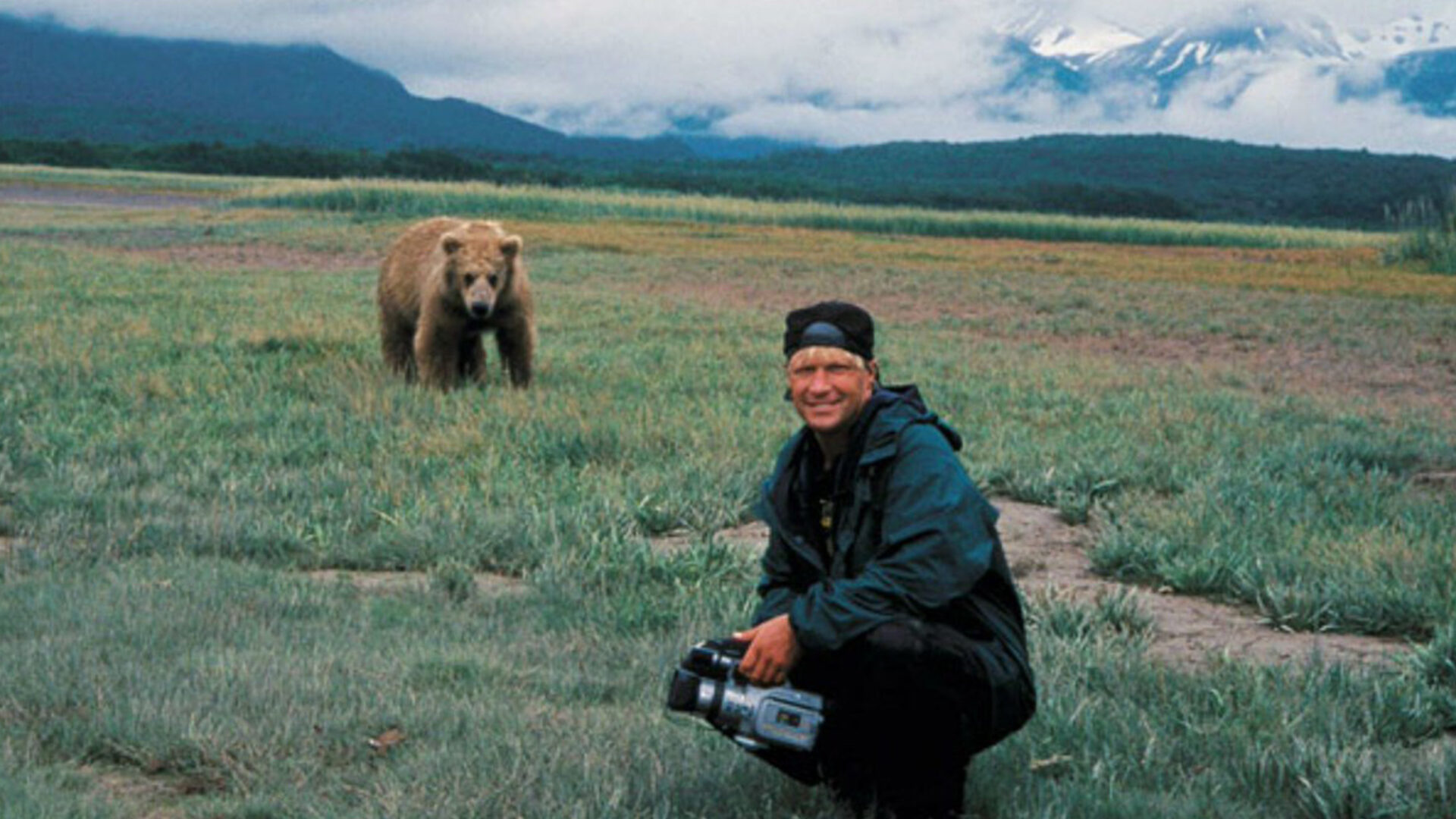
Over thirteen summers, Timothy Treadwell spent tens of thousands of hours living among brown grizzly bears in remote Alaska. That fact is far more remarkable than the circumstances of his death. Organisms need to eat, and sometimes you’re in the wrong place at the wrong time. The psychological forces that brought Treadwell to Katmai National Park are also fascinating. He was clearly suffering, a man lost and scared in the world of humans, seeking self-worth and peace among the bears, and he selfishly pulled others into his melodrama, one to her death. I give Werner Herzog credit for exploring these themes. Unfortunately, the director also insinuates himself into the story, challenging a dead man to a debate about the nature of nature. No, Werner, the universe is not uncaring and murderous, simply because care and murder are human concepts. Perhaps Treadwell died because he anthropomorphized nature, but Werner Herzog is guilty of the same offense on a far grander scale. There is no such thing as an objective documentary, and I suppose Herzog is making a point by unashamedly going to the other extreme. But there was a version of this film, a version without breathless voiceovers or weirdly inauthentic interviews, that would have concerned itself less with surviving, which is ultimately trivial, than with living, which is not. For all of Treadwell’s pain, there must have been mornings during those thirteen summers when the endless blue sky and the far-off glacier peaks and the gaze of a great beast evoked in him, and maybe in the bears too, the awe of the first morning. All this is ours, however short our lives. 6
Grizzly Man, directed by Werner Herzog, starring Timothy Treadwell, Lion’s Gate, 2005. Reviewed August 13, 2025.