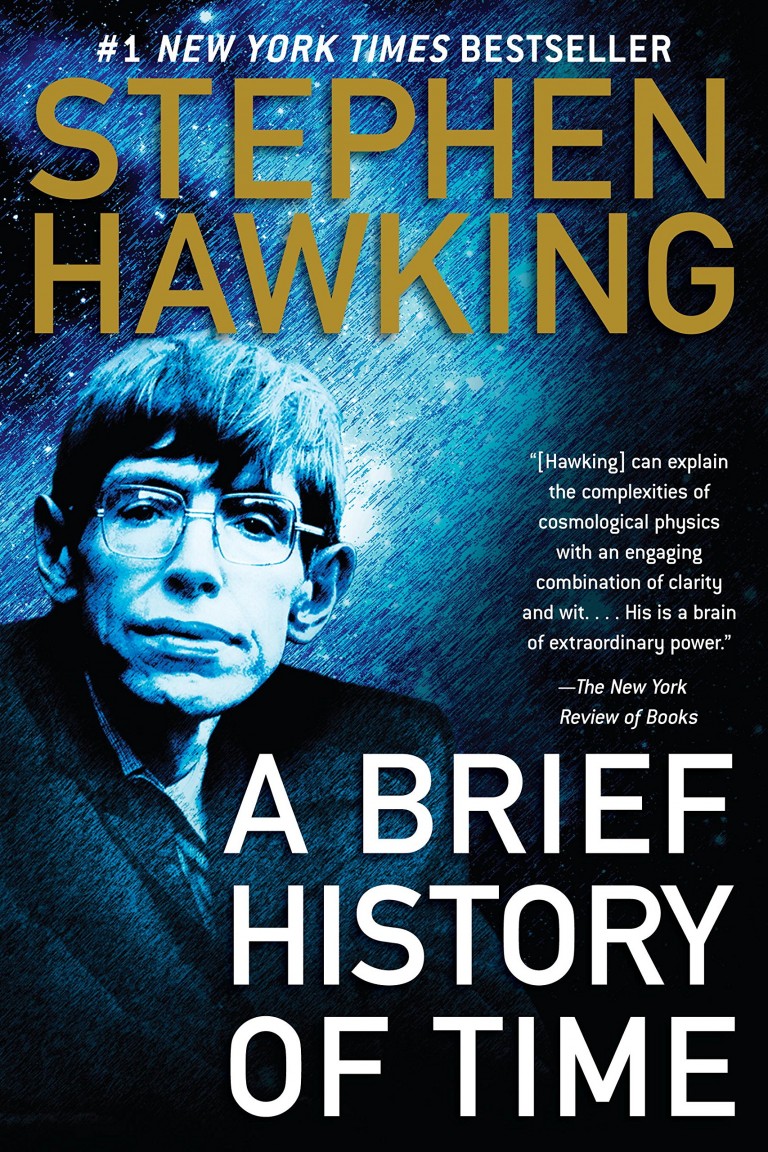
A Brief History of Time is clear, precise, and (indeed) short. Other books about cosmology are perhaps clearer (From Eternity to Here) or more precise (Black Holes & Time Warps) or even shorter (The First Few Minutes), but to date none have quite pulled off the combination like Hawking did decades ago. The book could use a tad more humility—Hawking and Hartle’s “no boundary” proposal, for example, isn’t quite the slam dunk he makes it out to be—but that’s not a virtue typically associated with theoretical physicists. Which is understandable. If I thought I had a good handle on the birth, growth, and death of reality, I might proselytize too. Hawking died in 2018. Had he lived two more years, he would have won the Nobel Prize alongside his good friend Roger Penrose, with whom he developed numerous revolutionary ideas about the nature of space and time. That’s okay. The mortal coil vanishes, legacies are eventually forgotten, but the information Stephen Hawking’s mind absorbed, recombined, and released is forever embedded in the structure of the universe. There’s no greater prize than that. 8
Hawking, Stephen. A Brief History of Time. Bantam Dell, 1988. Reviewed June 17, 2025.